
Introduction
Kerala's monsoon season brings heavy rainfall, high humidity, strong winds, and cloudy weather. While rain can help wash away loose dust from solar panels, it does not eliminate every type of dirt or prevent all maintenance issues. Leaves, bird droppings, algae, and debris can still affect the performance of your rooftop solar system.
For homeowners who depend on solar energy to reduce their electricity bills, proper maintenance is essential throughout the rainy season. Regular inspections and safe cleaning practices can help keep your solar panels operating efficiently and identify potential problems early.
In this blog, we explore practical **solar panel maintenance tips for Kerala's monsoon** to help you protect your investment and get the best possible performance from your solar system.
1. Do Not Depend on Rainwater Alone
One common misconception is that heavy rainfall keeps solar panels completely clean. Although rain removes loose dust and some surface dirt, it may leave behind water stains, mineral deposits, bird droppings, and other stubborn residues.
During Kerala's monsoon, moisture can also encourage organic growth around panel frames and nearby structures.
What should you do?
- Inspect your panels periodically for visible dirt and stains.
- Remove leaves and other debris when it is safe to do so.
- Arrange cleaning when the panels show significant dirt buildup.
- Schedule a thorough inspection after the monsoon season.
Regular inspection helps you determine whether cleaning is necessary instead of relying entirely on rainfall.
2. Clean Solar Panels Using the Right Method
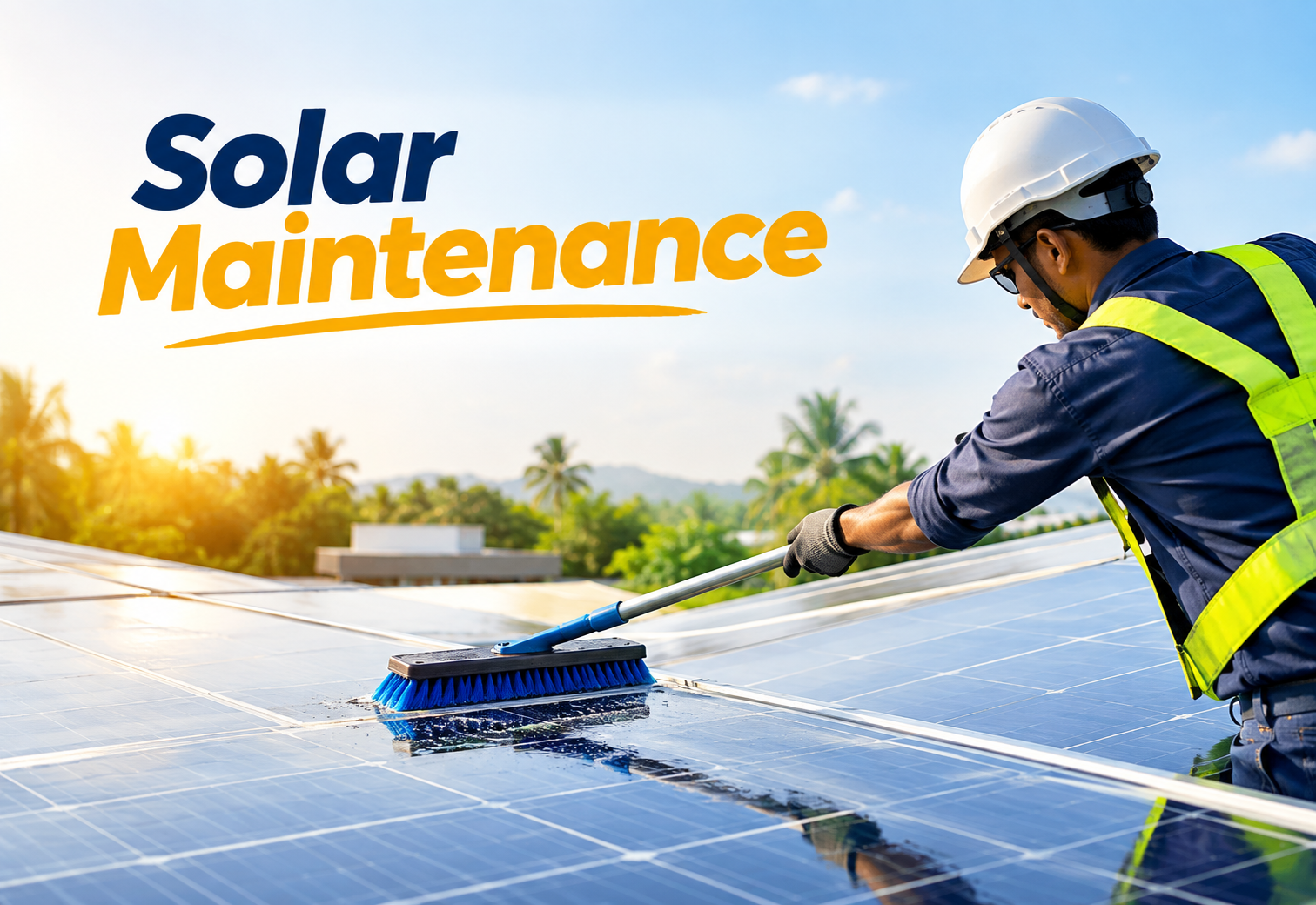
Proper cleaning helps maintain the amount of sunlight reaching your solar panels. However, incorrect cleaning methods can damage the panel surface or create safety risks.
Follow these basic guidelines:
- Use clean water and a soft sponge or suitable non-abrasive cloth.
- Avoid abrasive powders, metal brushes, and harsh cleaning chemicals.
- Never use excessive force or walk on the panels.
- Follow the manufacturer's cleaning instructions.
- Avoid cleaning when the panels are hot.
Early morning is generally a suitable time for cleaning because the panels are cooler. If your solar panels are installed on a steep or elevated rooftop, contact a trained professional rather than attempting to clean them yourself.
Important: Never climb onto a wet roof during or immediately after heavy rainfall. Solar panels and their electrical connections can present serious risks if handled incorrectly.
3. Inspect the Mounting Structure After Heavy Rain
Strong winds and heavy rainfall can put additional stress on rooftop solar installations. Although solar mounting systems are designed for outdoor conditions, periodic inspection is still important.
Look for visible signs of:
- Loose or displaced mounting components.
- Rust or corrosion on exposed metal parts.
- Damaged supports or unusual movement.
- Roof leaks near the installation area.
Do not attempt to tighten mounting bolts or repair the structure yourself if it requires rooftop access. A qualified solar technician can inspect the installation and recommend necessary repairs.
Timely maintenance can help identify minor issues before they become more serious.
4. Check Solar Cables and Electrical Connections
Moisture can expose weaknesses in damaged cables, connectors, seals, or electrical enclosures. This is why electrical inspection is an important part of solar panel maintenance in Kerala.
Homeowners should watch for visible cable damage, exposed wiring, repeated inverter faults, or unusual changes in system performance.
Electrical connections, junction boxes, earthing, and protective devices should be inspected by a qualified technician. Never touch wet electrical components or attempt to repair solar wiring yourself.
If you notice a burning smell, damaged wiring, or water entering electrical equipment, keep away from the affected area and contact a qualified professional promptly.
5. Monitor Your Solar Power Generation
Cloudy weather naturally reduces the amount of sunlight available to generate electricity. Therefore, lower solar production during the monsoon does not automatically indicate a fault.
However, monitoring your system regularly can help you identify unusual or persistent performance changes.
Most modern solar inverters provide generation data through a display or monitoring application.
Here is what you can do:
- Check your daily energy generation.
- Compare performance across similar weather conditions.
- Look for repeated inverter error messages.
- Contact your installer if generation remains unusually low after the weather improves.
Monitoring your solar system helps distinguish normal seasonal changes from potential maintenance problems.
6. Keep Roof Drainage Areas Clear
Kerala receives substantial rainfall during the monsoon, making proper roof drainage important for any rooftop installation.
Blocked drainage outlets can cause water to accumulate on the roof, potentially contributing to leaks or other building-related problems.
Check accessible drainage areas for fallen leaves, branches, and debris. Also, look for signs of water leakage inside the house near the solar installation.
Never enter an unsafe rooftop area during heavy rain to clear a blockage. If drainage problems occur near the mounting structure or electrical equipment, arrange a professional inspection.
7. Schedule Professional Solar Maintenance
Regular professional maintenance helps assess parts of the system that homeowners cannot safely inspect themselves.
A solar technician can check mounting hardware, cable insulation, electrical connections, inverter operation, earthing, and protective devices. A professional can also investigate persistent generation issues and recommend suitable corrective measures.
It is useful to arrange an inspection before the monsoon and another after severe weather or once the rainy season ends, depending on your installation's condition and service requirements.
Follow the maintenance schedule recommended by your solar installer and equipment manufacturer.
Frequently Asked Questions
Does rain clean solar panels completely?
No. Rain removes some loose dirt but may leave stubborn stains, bird droppings, and mineral deposits. Inspect your panels and clean them when necessary.
How often should solar panels be cleaned in Kerala?
There is no universal schedule. Cleaning frequency depends on dust, nearby trees, bird activity, local pollution, and the manufacturer's recommendations. Inspect the panels regularly and adjust cleaning frequency according to actual dirt buildup.
Do solar panels work during heavy rain?
Yes. Solar panels can generate electricity during rainy weather, but output usually decreases because less sunlight reaches the modules. Actual generation depends on cloud cover, system design, and available daylight.
Can I clean solar panels myself?
Only if the panels are safely accessible and you can follow the manufacturer's instructions without exposure to electrical or fall hazards. For elevated, steep, or wet rooftops, use a qualified professional.
Conclusion
Maintaining solar panels during Kerala's monsoon does not have to be complicated. Safe cleaning, periodic inspections, drainage checks, and regular performance monitoring can help homeowners identify issues and maintain reliable solar system operation.
Remember that rain alone is not a complete maintenance solution. Paying attention to your panels, mounting structure, inverter, and electrical components is important for long-term performance.
Looking for reliable solar solutions or professional guidance?
SolarTech can help you understand your rooftop solar requirements and explore suitable solar solutions for your property.
Contact our team to discuss your solar installation and maintenance needs.